Pages

Friday, February 2, 2018

“Roadkill” Sandwich Spread Recipe for Sandwiches or Dip

Just so you know, if you're looking for ways to cook roadkill, i.e., critters that have met their ends in traffic, this is not that kind of post. This is about a quick and easy, budget friendly sandwich spread recipe. It's a great way to stretch leftover bits of meat into another meal. I grew up calling it “roadkill”; it may have different names other places. If you're skipping bread, you can also use it as a dip with some veggie sticks.

It should also be noted that it earned me an “A” back in grad school, and a rather confused and curious look from my statistics teacher. I submitted an analysis for my Applied Statistics class titled, “The Taste of Roadkill”. (This was back in grad school when I got my mechanical engineering degree.)

Using multivariate linear regression (which I haven't used since), I determined that adults preferred the taste of roadkill sandwich spread in combination with real cheese, over the taste of sliced meat and processed cheese slices, nearly two to one. (Kids liked the sliced meat and processed cheese better, but they don't pay the bills.) This was good news for our family catering business, as it gave statistical proof to back up our use of budget friendly sandwich spreads like this for hors-d'oeuvres and canapés.

The combination of flavors is simple and good. I don't measure exactly, I just use what I have on hand and “eyeball it”.

“Roadkill” Sandwich Spread Recipe

Ingredients

  • Finely chopped cold meat of your choice – my favorites include roast beef, roast chicken and ham
  • Mayonnaise – your choice of homemade or store bought
  • Pickle Relish – your choice of store bought or homemade

Directions

To make roughly 1 cup of meat into roadkill spread, I started with the finely chopped meat, and add about 2-3 tablespoons of mayo and 2 tablespoons of relish, and then mix well. Add more mayo and/or relish to taste. You want it to come together nicely and be easy to spread or scoop with crackers or veggies. Store in a closed container in the refrigerator for up to 2 days.

"Roadkill" Sandwich Spread Recipe - quick and easy, budget friendly sandwich spread recipe or dip that's a great way to stretch leftover bits of meat into another meal.

Avocado Oil Mayo

For this batch of dip, I used leftover roast beef in combination with homemade pickle relish sweetened with honey and Primal Kitchen Mayo. I received a jar of the Primal Kitchen Mayo to review and write up a recipe for, and ended up with a complete case of brain lockup.

I don't use a ton of mayo, and what I use it for most is probably deviled eggs – but everyone does deviled eggs. (And I had just put up recipes on the site for classic and guacamole deviled eggs.) Sandwiches, potato salad, pasta salad, Waldorf salad – all great uses for mayo, not so paleo/primal. Fresh garden produce for inspiration? Not this time of year. Then, digging for lunch, I had a “Duh” moment, and realized the answer and old family favorite was staring me in the face. Sandwich spread recipes don't have to be just chicken or tuna – use whatever you have on hand!
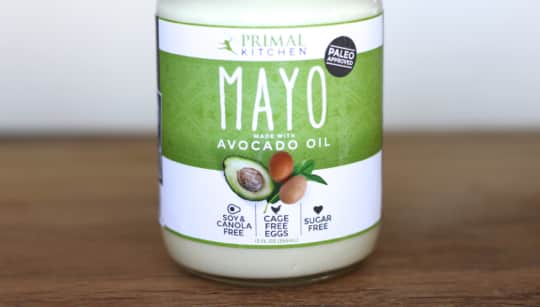
Primal Mayo made with avocado oil.For the foodies reading this post, you'll appreciate the quality ingredients in the Primal Kitchen Mayo. It's made with avocado oil – not canola or soy or olive oil. Avocado oil is loaded with monounsaturated oleic fatty acids (good fats). I tried to love olive oil mayo because it has the same type of healthy fats, but it's just too floral to my palate. This mayo tastes good! It also includes organic cage-free eggs, organic egg yolks and organic vinegar – but no sugar. All the stuff you want without the stuff you don't. 🙂

You may also enjoy:

Easy Liver Pate with Bacon

Ground Beef Jerky

Chocolate chip cookie dough truffles made with almond flour and coconut oil
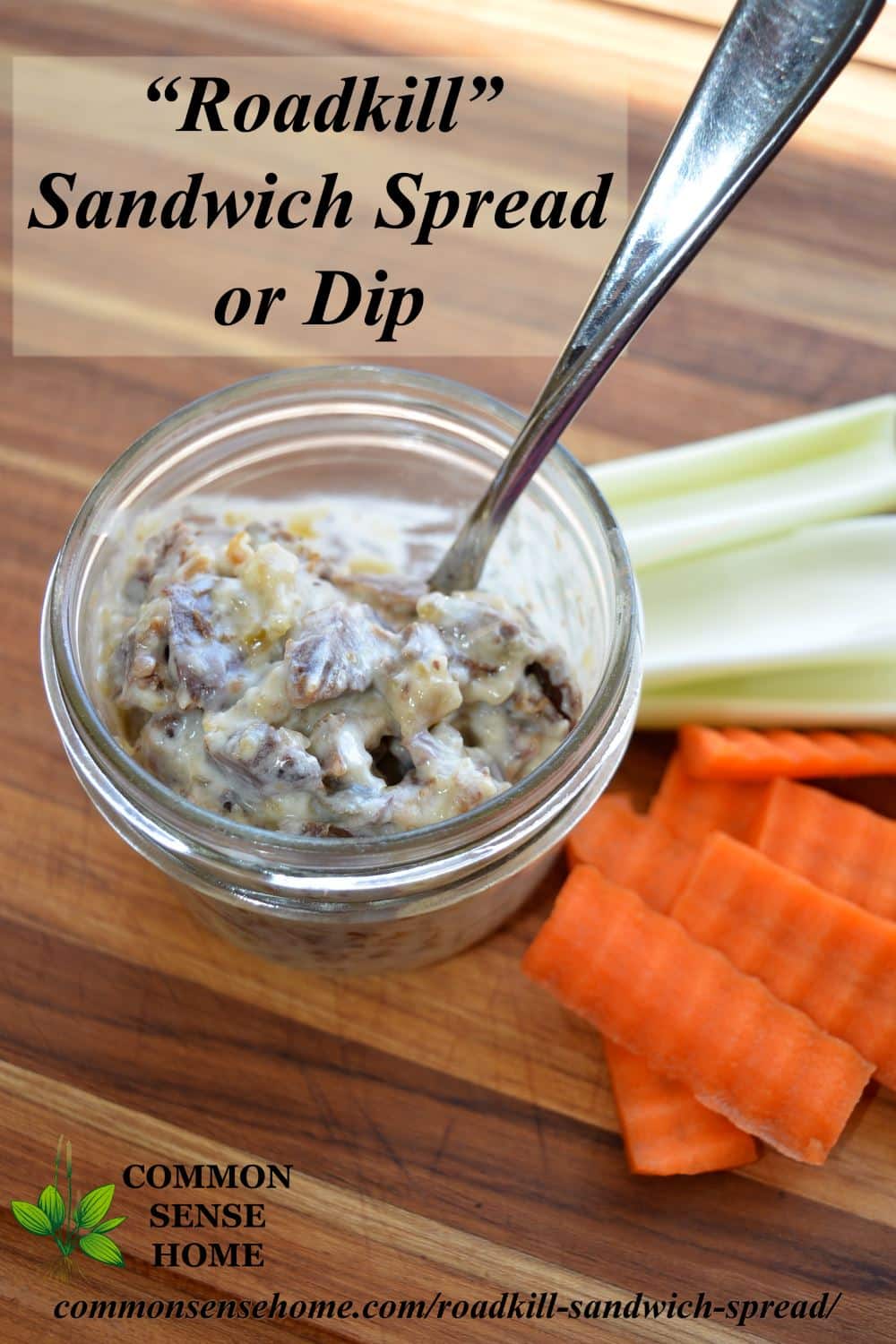
"Roadkill" Sandwich Spread - quick and easy, budget friendly sandwich spread or dip that's a great way to stretch leftover bits of meat into another meal.

Originally posted in April 2105, updated in 2018.

The post “Roadkill” Sandwich Spread Recipe for Sandwiches or Dip appeared first on Common Sense Home.

The post “Roadkill” Sandwich Spread Recipe for Sandwiches or Dip appeared first on Homesteading Alliance.


The Cheap, Easy-To-Make Survival Lamp Your Great-Grandparents Used

Imagine you are sitting in a log cabin, or perhaps hunkered down in a lean-to or some other makeshift shelter in the woods. It’s dark, and you’d like more light than your fire provides so you can do some chores.

Maybe you are mending your socks, or sewing a button back in place, enjoying a meal, or just trying to do a little reading before bed. Or maybe you are in a survival situation, and have lost modern means of lighting, or the grid has gone down, and your rural homestead still needs lighting. Or maybe you just like the tools and skills of the past. Either way, it’s dark and you want some light. There are a number of traditional means of lighting your home or shelter, ranging from kerosene lamps, to wax or tallow candles, to the often-forgotten tallow lamp.

Illumination through combustion was the first way our ancestors fought off the darkness, starting with fires and torches, and reaching a point of refinement with pressurized white gas and propane before the electric light won out in the end.

Until petroleum refining took off in the mid-19th century, natural fats and oils provided that illumination. In the Middle East, olive oil was a popular illuminating oil, and at one time, whale oil lit the homes of the well-to-do and wealthy in Europe and America. However, by and large for the common person, candles provided that light. But hunters, natives and the very poor knew of another light that could be as simple as placing melted tallow (a rendered form of fat) in a shallow dish and setting it alight, or using a bit of cloth or porous fiber, string, twine, etc., to serve as a wick. It is a traditional method of lighting that has existed for thousands of years.

Get 100,000 Hours Of Emergency Backup Lighting!

These very simple lights can be made from material readily found in the wilderness, and a tablespoon or so of tallow has been shown to provide useful light for about 45 minutes, making it perfect for working on evening tasks before bed, or even just a few minutes with your Bible or another book. Like all simple tools, the tallow lamp can seem more complex than it really is to our modern mind, so let’s take a look at a common way of making them.

Seashells were one way of holding the tallow, but you also could do it with a piece of bark, a stone with a hollow in it, a small dish, or really anything capable of holding the tallow. For a wick, an inch or two of simple string or twine will suffice, as will a strip of scrap cloth.

Melt the tallow and pour it around your wick (it can be laying sideways if needed), or even press unmelted tallow or fat around the wick. You also can run the wick through a button that will hold it upright in the pool of tallow (a so-called button lamp) and make it a bit more efficient.

What you get with just a minute or two of work is a crude, but effective, lamp. This would not be suitable as your primary lighting source unless you had no other choice, but it becomes invaluable for the stranded hunter or in a total societal collapse. (It’s a great way to use up rancid or heavily used cooking fats, though.)

One of the biggest drawbacks to the tallow lamp, aside from the low levels of light it produces and the fact that it is both smoky and can put out an odor, is that it demands the use of edible fats. You can make lamps along these lines with any kind of natural oil, and as we all know (or should know) fats are very important in a survival situation. Fat consumption provides valuable caloric energy, so this puts tallow lamps strictly in the realm of something to use when you have a sufficient fat supply.

Making tallow lamps isn’t hard. While they are not the greatest source of light, they are more than sufficient for personal use, and are a useful tool when you have no other source of light.

Have you ever made a tallow lamp? Share your tips in the section below:

Harness The Power Of Nature’s Most Remarkable Healer: Vinegar

This article first appeared on offthegridnews.com See it here

The post The Cheap, Easy-To-Make Survival Lamp Your Great-Grandparents Used appeared first on Homesteading Alliance.

Biofuels: Is the Future Bright or Bleak?

by Giles Kirkland

Biofuels are one of the most promising forms of renewable fuel sources available on the market today. As we edge closer towards the end of the fossil fuel era, renewable energy sources have become ever more important to our technological development. But what are Biofuels exactly?

The simplest explanation is that Biofuels are fuels made out of plant materials and other natural products. Like fossil fuels they are combustive and release energy after they are ignited. The most common types of biofuels produced are ethanol and biodiesel. These are produced from a combination of sugarcane, cornstarch, vegetable oils and animal fat.

biomass

It’s important to note that biofuels can be produced from all kinds of natural byproducts, all the way from bacteria to wood. Scientists are consistently researching ways to utilize natural waste products in the form of biofuel in order to reduce our dependency on fossil fuels. Whilst many have become critical of biofuel’s future viability, there are strong supporters who remain optimistic.

Biofuels in Modern Cars

In order for a conventional car to run on biofuel (or bioethanol), it needs a couple of modifications in order to run safely. The ignition timing must be adjusted and a larger fuel tank must be added as biofuel has a lower energy density than petrol. In most cases, pure bioethanol is mixed with a small amount of petrol in order to improve ignition.

Just like cars running on fossil fuels, consumers only need to drive to a fuel pump in order to top up on biofuel or biodiesel. The caveat is that biofuel pumps are not as readily available as petrol pumps, but they are still widely available. It’s worth noting that biofuel driven cars require much more fuel per mile, as bioethanol and biodiesel have a much lower energy content than petrol.

The Optimistic Perspective

As electric vehicles are developed more effectively many have suggested that biofuels are unable to meet the needs of the next generation of sustainable vehicles. After all, any biofuels produced need to be created from biomass, and the mass needed to sustain our fuel consumption is gargantuan. We not only need to replace fossil fuels, but the infrastructure used to circulate them as well.

However, as our technology advances, production of biofuels will become much more efficient, and will serve to increase biomass yields. Right now, we’re starting to see a wave of “second generation” biofuel companies emerging. Once such example is Fiberight, a waste disposal company that takes 650 metric tons of trash everyday and uses it to produce 8 million gallons of ethanol each year.

biofuel

The Pessimistic Perspective

Much has been made over the prospect of biofuels resulting in adverse environmental effects as part of their production process. Biofuels based on ethanol crops have a drastic effect on the surrounding land, where trees are flattened in order to make way for a ‘sustainable’ energy solution.

There is little point in replacing fossil fuels with biofuels that can only be cultivated through environmental destruction. Most critics are concerned that land use could result in a variety of emissions and ecological damage that either matches or exceeds that of traditional fossil fuels.

At this point in time, the EU commission has suggested minimizing the use of ‘first generation biofuels’. This also harms the prospect of future investment in second-generation biofuels, as investors (and the public) are deterred from investing in an energy source that is problematic and fundamentally harmful to the environment.

Third Generation Biofuels

Despite the challenges facing biofuels, algae based fuel could be the answer to all of the above problems. Third generation biofuels make use of algae and then refine it in order to produce diesel fuel. However, what really makes this generation stand out is that algae can be genetically engineered. Scientists can manipulate algae to produce all sorts of products like ethanol and butanol.

algae fuel

In the past butanol was extremely difficult to produce, but our production methods are slowly becoming more sophisticated. In terms of production, algae based biofuels stand out because they can be grown in closed-loop systems, open ponds and photobioreactors.

All three of these avenues don’t result in loss of farmland or massive ecological damage. That being said, third generation biofuels remain in their infancy. Back in 2013, Exxon Mobile estimated that algae-based biofuels will not be viable for 25 years. Yet, chances are that with the intensive research a breakthrough will come earlier than expected.

Biofuels: Long Term Viability

Though biofuels look unable to take on our energy demands for the foreseeable future, as our technology develops we will become much more adept at extracting algae based fuel on a global scale. Though first generation biofuels failed to meet consumer expectations of sustainability, second and third generation biofuels look set to put the gears back in motion.

As soon as we make the biofuel development process more efficient, we’ll be much more able to supply sustainable fuel on the scale required. Of course this will still take some but at some point innovative companies will start to put their production machines behind biofuel as the energy source of the future.

***

Giles Kirkland is a dedicated car expert with passion for travelling and helping the environment. He enjoys commenting on newly-emerging green technologies and willingly shares his knowledge with other sustainable living enthusiasts.

This article first appeared on offgridworld.com Check it out here

The post Biofuels: Is the Future Bright or Bleak? appeared first on Homesteading Alliance.

7 Invasive Weeds You Can Turn Into Livestock Feed

Stinging nettles. Image source: Pixabay.com

Most homesteaders have to deal with some kinds of invasive plants. On our farm in upstate New York, the main culprit is multiflora rose. People planted it as deer feed back in the 1960s and now, it’s everywhere, taking over hayfields and pastures with its sprawling big-thorned fast-growing stems. Multiflora rose removal was one of my least favorite chores: heavy, prickly and never-ending. Then we discovered that our goats enjoyed eating multiflora rose. And then we learned that it was actually good for them.

I still spend time every summer hacking down multiflora roses in the orchard and pasture, but my attitude has changed. Instead of endlessly beating back a useless nuisance, I’m harvesting a forage crop.

Deciding What’s Safe To Feed

I’ll discuss some specific nutritious invasives below. I likely won’t include all the invasives in your area, so you’ll need to do some of your own research. This may be complicated by the fact that there’s a lot of conflicting information out there. Some plants, for example, appear both on lists of safe food for rabbits and lists of plants toxic to rabbits. Here are a few factors to keep in mind as you decide what to feed your animals:

Many plants are safe when fed as a small portion of the overall diet, but become problematic in heavy concentrations. It’s generally not a good idea to offer only one or two types of forage to your animals, or to feed huge quantities the first time they’re introduced to a new food. Offered free choice, as part of a varied diet, many weeds can be safe and healthy. Some, like mountain laurel or locoweed, are truly poisonous and should be completely avoided. But if you find a lot of recommendations and some cautions around a particular plant, you might try offering your animals a small amount of it and seeing what happens.

Diatomaceous Earth: The All-Natural Livestock De-Wormer!

Toxicity and nutrition may vary depending on your location and soil type. Try asking local farmers and/or your local Cooperative Extension about the effects of plants grown in your area.

Some plants are healthy at one stage, problematic at another. For instance, we feed young leaves of burdock and curly dock to our rabbits, but after the plants have flowered we stop feeding; older plants may accumulate nitrates to the point of mild toxicity. If you keep cutting plants off before they go to seed, you can harvest young leaves over a long season.

Plants that are safe in themselves may be unpalatable or unsafe if they’re diseased. Clover is generally a safe and healthy feed, but in my region in wet summers it can develop white mold; we take care not to feed any of this to our rabbits, since rabbits are highly mold-sensitive.

Many different plants may share the same common name. Use Latin names in your research to be sure you have the right plant.

A Gallery Of Gourmet Weeds

1. Multiflora rose (Rosa multiflora), the thorny invader previously described, contains 10-13 percent protein, and it can help ruminants to expel worms. Goats, sheep, cows and horses can eat it. Our goats don’t mind the thorns. After the rose has flowered, our goats may get diarrhea from eating too many of the hips at once. I’ve seen one report of a horse injuring its eye on the thorns.

2. Kudzu (Pueraria montana). Farmers south of us have reported great success with feeding kudzu to cows, goats, sheep, pigs, chickens and horses. It’s high in protein, and apparently highly appealing to many animals. Given its legendary growth rate, it’s a nearly inexhaustible food supply.

7 Invasive Weeds You Can Turn Into Livestock Feed

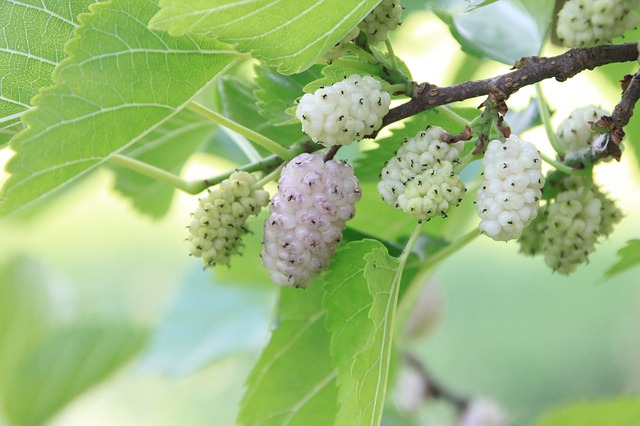
White Mulberry. Image source: Pixabay.com

3. White mulberry (Morus alba) is an invasive tree in many states. Its protein-rich leaves and stems are a valuable feed for cows, goats, sheep and rabbits; pigs and chickens will eat its fruit.

4. Burdock (Arctium spp.) is a nuisance in pastures. Its flat leaves spread widely, killing everything else; its burrs tangle in animals’ hair. But young burdock leaves, cut before the plant flowers, are rich in protein and minerals. We feed tender small burdock leaves to our rabbits, who tolerate them, and larger leaves to our goats, who relish them. Chickens and cows also will eat burdock leaves, up to a point. Older leaves may accumulate excessive nitrates, so don’t feed them heavily.

5. Stinging nettle (Urtica dioica) does just what its name suggests. I was very displeased when it started taking over a corner of our pasture. Then I learned that it’s rich in protein, iron, calcium and vitamins. Once it’s dried, it no longer stings. We give our dried nettle to nursing mother rabbits in the early spring before other rich foods are readily available. Chickens, pigs, cows, horses, sheep and goats also can benefit from eating dried stinging nettle.

6. Garlic mustard (Alliaria petiolata) self-seeds copiously and comes up in dense mats. Since it starts to grow earlier than many other annuals, its leaves can provide an early treat and a vitamin boost for chickens, rabbits, goats, cows and sheep. Later in the year it may be less palatable—and any way you’ll want to cut it or graze it before it goes to seed. Some sources say it shouldn’t be given to horses.

7. Redroot pigweed (Amaranthus retroflexus) takes over garden beds and farm fields. It’s widely agreed that young plants which haven’t yet set seed are safe and nutritious feed for chickens, rabbits, pigs, sheep, cows and goats. We’ve fed seeded redroot pigweed to our rabbits with no ill-effect.

What are a few of your favorite weeds to feed livestock? Share your tips in the section below:

Discover The Secret To Saving Thousands At The Grocery Store. Read More Here.

This article first appeared on offthegridnews.com See it here

The post 7 Invasive Weeds You Can Turn Into Livestock Feed appeared first on Homesteading Alliance.
Learn How to Build A U-Shaped Raised Garden Bed

Growing plants in your yard is not easy. But if you can make the task easy, why shouldn’t you resort to clever tricks? The DIY Raised Garden Bed (MyDailyRandomness Blog) is one such trick that will definitely help. Besides the improved quality of the soil as well as better drain access benefited from a raised garden bed, you can still have issues reaching some of your plants; and that was the whole point of having a raised garden bed in the first place – easier access and less effort.

See more at: http://www.goodshomedesign.com/learn-how-to-build-a-u-shaped-raised-garden-bed/

This post originally appeared on goodshomedesign.com See it here

The post Learn How to Build A U-Shaped Raised Garden Bed appeared first on Homesteading Alliance.

Flashback: The Worst Ice Storm In American History (People Were Without Power For WEEKS)

When you think of natural disasters that could interrupt the power grid, you probably think of hurricanes, tornadoes and floods. However, it was a massive ice storm that left millions of Canadians and some Americans without electricity and heat for a period of days to weeks in 1998.

Known as the Great Ice Storm of 1998 or the North American Ice Storm of 1998, the huge January weather event was really a combination of five smaller ice storms that struck a narrow geographic band that stretched from eastern Ontario to southern Quebec and Nova Scotia and included a section of northern New York and central Maine. Upwards of three inches of ice fell in some places.

The storm’s wrath killed 35, injured 945 and displaced about 600,000 people. Additionally, the resulting widespread power outage affected 1.4 million people in QuĂ©bec and nearly 240,000 people in eastern Ontario. The total financial cost of the storm is estimated in excess of $5 billion.

Story continues below video

People were without power for anywhere from several days to several weeks, and, in a few instances, several months, as Canadian workers scrambled to reconstruct the power grid in the wake of the damaging ice. More than 1,000 transmission towers collapsed.

The Weather Channel recently named it the worst ice storm in U.S. history – nearly 80 percent of Maine was without power — although its impact was felt mostly in Canada.

Are You Prepared For A Long-Term Blackout? Get Backup Electricity Today!

To handle the crisis, which included the closing of several main roads, more than 16,000 members of the Canadian military were deployed, the largest peacetime deployment in Canadian history.

Story continues below video

Ice storms are not unusual during the winter in the Lake Ontario and St. Lawrence region, a location where warm low-pressure currents from the Gulf of Mexico encounter cold high-pressure currents from the Arctic. When the two currents collide, warm air tends to rise above the cold air. Then, the resulting precipitation often begins as rain but freezes as it reaches lower altitudes or hits the ground.

Between Jan. 4 and Jan. 10, 1998, however, parts of the St. Lawrence Valley in Quebec received more than twice the amount of icy precipitation they average in an entire year.

Although Kingston and Ottawa received the brunt of the storm, about 2.6 million people — nearly one fifth of all Canadian workers—were either impeded or prevented from getting to their place of employment. Businesses of all sizes in Quebec were severely impacted, and many small communities were completely shut down by the storm.

The storm hit a large location for the Canadian dairy industry. Many dairy cows became ill as the mechanical operations to feed and milk them shut down. To make matters worse, with power out at local milk processing plants, more than 10 million liters (2.6 gallons) of milk had to be thrown away.

Canada’s maple syrup industry also was devastated by the storm, as millions of tree branches were damaged. More than 20 percent of Canada’s syrup-producing tree taps also were disabled or destroyed in the storm, and QuĂ©bec syrup makers lost most or all of their entire sugar bush. The damage was so severe that it took years for the industry to recover.

As one of the worst natural disasters in Canadian history, the Great Ice Storm of 1998 was the cause of $5 to $7 billion in economic losses, with insured losses from the event reaching $1.6 billion.

Have you ever experienced an ice storm? Share your memories in the section below:

Be Prepared For A Downed Grid. Read More Here.

This article first appeared on offthegridnews.com See it here

The post Flashback: The Worst Ice Storm In American History (People Were Without Power For WEEKS) appeared first on Homesteading Alliance.

Thursday, February 1, 2018

The Hidden Costs Of Homesteading

The benefits of modern-day homesteading are immeasurable, but as any homesteader will tell you, this off-grid way of life isn’t free, either.

That’s what modern homesteader Jill Winger discovered when she and her husband dove into homesteading years ago.

Jill is the author of two books and the creator of the popular blog The Prairie Homestead. She’s also this week’s guest on Off The Grid Radio.

Jill tells us the real costs of homesteading based on her experience.

She also tells us:

  • How to balance cost vs. quality when purchasing homestead items.
  • Why it doesn’t pay to cut corners when setting up a homestead.
  • How to get started on a home business that can bring in extra cash.

If you’ve ever had dreams of homesteading – or you’re just wanting to improve the homestead that you have — then this week’s show is for you!

This article first appeared on offthegridnews.com See it here

The post The Hidden Costs Of Homesteading appeared first on Homesteading Alliance.